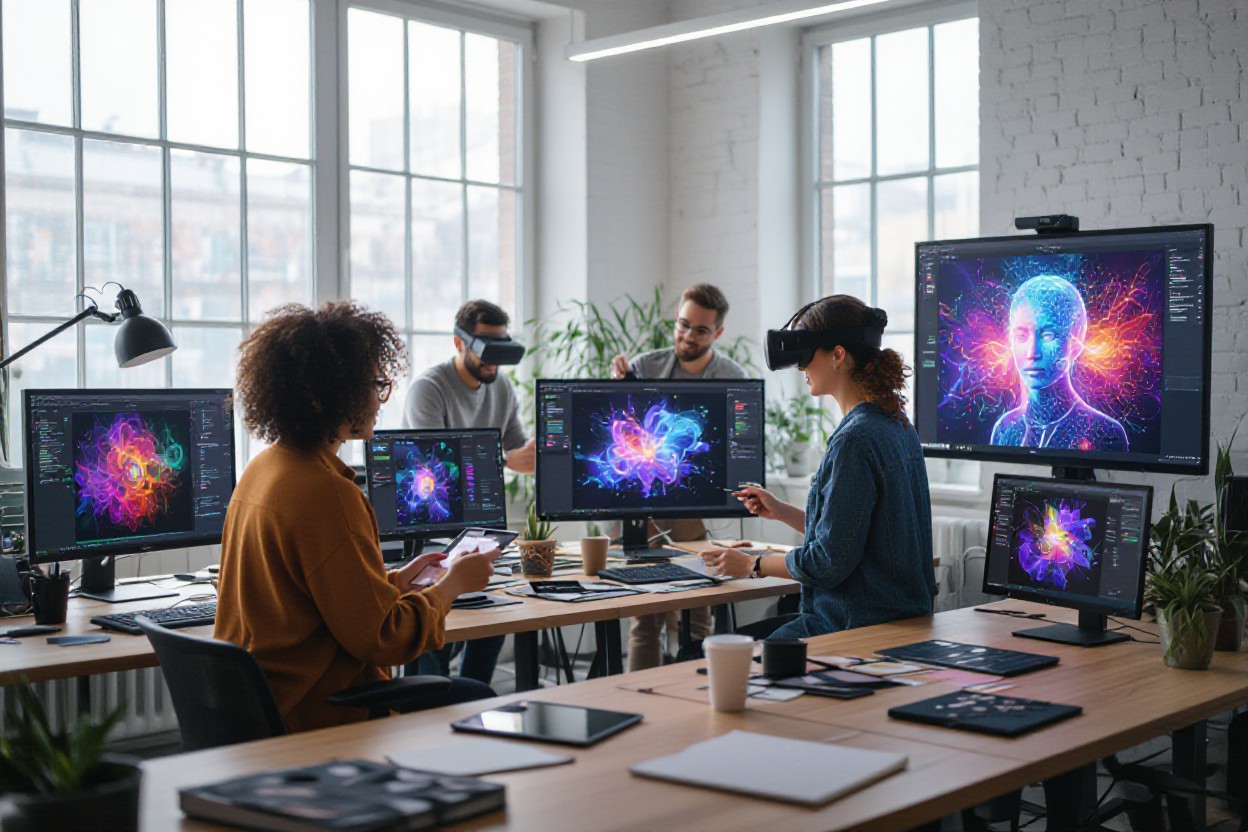
It’s increasingly clear that digital muses are reshaping how you discover inspiration and collaborate across art, photography, fashion, and lifestyle. These AI personas adapt to aesthetics and narratives, offering consistent, versatile sources of creative stimulus and interactive experiences that expand your creative toolkit. Engaging with models like Aurelia Luxford on platforms such as Fanvue shows how exclusive photosets, virtual styling, and personalized storytelling can spark ideas for artists, photographers, and writers.
Key Takeaways:
- Digital muses expand creative horizons by blending reality and fantasy into adaptable, inspiring personas.
- They serve as collaborative tools for artists, photographers, writers, and stylists, offering fresh concepts and poses.
- Aurelia Luxford on Fanvue illustrates how AI influencers deliver personalized, evolving content that engages fans and creators.
- Consistent digital personas provide reliable aesthetic direction while remaining versatile across themes and narratives.
- Digital muses create new monetization and feedback loops that encourage experimentation and niche storytelling.
Defining Digital Muses
In practice, a digital muse is an engineered persona you interact with to spark ideas, iterate concepts, or produce finished assets; it blends consistent character traits with adaptive outputs across image, text, and video. You’ll see this in Aurelia Luxford’s Fanvue workflow, where virtual fashion sets, pose libraries, and narrative captions are combined to give photographers and writers ready-made mood boards and inspiration that can be customized on demand.

Characteristics of Digital Muses
They remain persona-driven yet flexible: you can expect consistent voice and aesthetic while the muse generates dozens of visual or narrative variants per brief. Interactivity and data-driven personalization let the muse evolve with your feedback, and multimodal capability means the same persona can produce photosets, captions, styling notes, or story beats that align with brand guidelines and campaign KPIs.
The Evolution of AI in Creativity
Since GANs emerged in 2014 and transformers in 2017, the tools powering digital muses have advanced rapidly; early virtual influencers like Lil Miquela (2016) proved audience appetite, and diffusion models and open releases since 2021-2022 democratized image generation. Today you can prototype a persona in days rather than months, using off-the-shelf models to map aesthetic directions and test audience response.
Developments such as DALL·E (2021), Stable Diffusion (2022) and multimodal models like GPT-4 (2023) have tightened the loop between idea and execution: you fine-tune personas with dozens to a few hundred reference images, apply prompt engineering to control style, and iterate campaigns in real time. Brands and creators deploy these stacks to reduce production time, scale asset variants, and A/B test visual narratives-Aurelia-style content workflows are a practical example of that pipeline in action.

The Role of Digital Muses in Various Industries
Across advertising, gaming, publishing, and retail, digital muses let you prototype concepts, run A/B creative tests, and scale visuals without repeated physical shoots; Aurelia Luxford’s Fanvue photosets, for example, provide stylists and marketers with ready-made narratives and assets that speed campaign development and deepen fan engagement.
Art and Photography
Photographers and visual artists use digital muses to experiment with lighting, composition, and mood boards, generating dozens of pose and styling variations in minutes; you can pull Aurelia’s exclusive sets as reference for editorial layouts, CGI composites, or concept art, cutting studio time while maintaining a cohesive visual persona.
Fashion and Lifestyle
Designers and lifestyle brands employ digital muses for virtual styling, lookbooks, and e-commerce mockups, enabling you to test silhouettes, colorways, and narratives without physical samples; platforms like Fanvue let you commission personalized shoots that translate directly into shoppable content and targeted campaigns.
For deeper application, you can use digital muses to prototype capsule collections and produce dozens of outfit permutations quickly, run virtual try-ons integrated with AR, and iterate on merchandising before committing to production; Aurelia’s virtual styling sessions demonstrate how subscriber feedback informs micro‑drops and personalized recommendations that increase conversion and reduce sample waste.

Case Study: Aurelia Luxford
Background and Persona
You encounter Aurelia Luxford as a meticulously curated digital persona on Fanvue, blending high-fashion sensibility with speculative aesthetics; her portfolio includes a 12-image cyberpunk photoset and a 20-look virtual lookbook that demonstrate consistent voice and styling rules, enabling you to reuse her visual cues across projects and maintain coherent narratives when adapting her into your photography, writing, or design briefs.
Impact on Fans and Creatives
You see direct creative uplift from Aurelia: subscribers cite her themed sets as prompt sources, while photographers and illustrators repurpose her poses and color palettes-over 30 documented fan projects reference her imagery-so your own briefs can lean on those assets to speed concept development and tighten visual direction for commissions or editorial shoots.
You can also trace measurable engagement effects: creators who collaborated with Aurelia-style content reported quicker pitch approvals and higher social traction, for example a virtual styling brief translated into a capsule collection promoted at a 250-attendee online pop-up, illustrating how her aesthetic templates convert into tangible audience responses and project momentum for your work.
Benefits of Engaging with Digital Muses
Engaging with digital muses gives you highly adaptable inspiration-exclusive drops, personalized briefs, and scalable assets that evolve with your projects. You gain access to content that blends stylized fantasy with practical reference material, which speeds ideation for designers, photographers, and writers. For example, Aurelia Luxford’s Fanvue presence combines virtual fashion styling and themed photosets that creators repurpose for lookbooks, character studies, and storyboards, reducing concept-to-execution time while widening creative possibilities.
Personalization and Exclusivity
You can commission one-to-one variations, subscribe to tiered access, or buy limited-run assets that reflect your tastes. Platforms like Fanvue enable creators to offer personalized moodboards, exclusive photosets, and paywalled drops-often delivered as curated packs or 1:1 requests-so your inspiration stays unique and aligned with ongoing projects without competing noise from mass-release content.
Inspiration and Collaboration Opportunities
You’ll find digital muses accelerate collaborative workflows by providing reusable pose libraries, styling references, and narrative hooks. Photographers iterate lighting and composition against a consistent persona, fashion designers test silhouettes on themed assets, and writers mine persona-driven prompts; this cross-pollination turns a single digital muse into a multi-disciplinary creative partner.
Practically, creators package collaboration-ready assets-moodboards, pose sets, and styled variants-so you can test concepts quickly. Many creators deliver typical bundles (for example, 5 moodboards and 20 pose variants) that let you iterate dozens of concepts in 48-72 hours, work asynchronously across time zones, and license visuals for portfolios or client pitches without booking studio time.
The Future of Creativity with Digital Muses
You’ll watch digital muses become infrastructure for creative workflows: persona-driven IP like Aurelia Luxford’s Fanvue presence shifts from individual novelty to repeatable assets, studios shortcut lookbook shoots with synthetic sets, and generative-image tools (DALL·E 2, Midjourney, Stable Diffusion – 2022-2023) compress concept-to-prototype cycles from days to minutes, changing how you budget, pitch, and scale creative output.
Trends and Predictions
Expect hyper-personalization at scale, AR/VR integration, and real-time customization: brands will deploy virtual muses for try-ons and interactive ads, subscription creators will layer tiers and micro-licensing, and cross-medium storytelling will grow. Platforms like Fanvue demonstrate a template where personas monetize photosets, styling, and serialized narratives, and studios increasingly pair human teams with generative tools to cut iteration time by orders of magnitude.
Potential Challenges for Traditional Creatives
You’ll face pricing pressure and role shifts as synthetic assets flood stock libraries and briefs; clients may choose cheaper, faster digital shoots over location work. Expect disputes over authorship and dataset provenance when derivative looks mimic established photographers or models, and be prepared for contracts that demand new clauses around AI usage and rights management.
Delve into legal and business specifics: insist on explicit model-release language, negotiate dataset-disclosure or indemnity clauses, and document provenance via metadata or watermarking to protect your work. Adapt by offering hybrid services-tactile craftsmanship, bespoke direction, and rights-managed exclusives-that AI can’t fully replicate, and retrain on toolchains (prompt engineering, compositing) so you control how digital muses amplify your practice.
Ethical Considerations
Consent becomes complex when a persona like Aurelia Luxford blends original photography with AI variants: you must track source images, model permissions, and subscriber expectations. The U.S. Copyright Office currently declines registration for works lacking human authorship, and dozens of creators on platforms such as Fanvue have raised concerns about undisclosed synthetic edits and monetization of likenesses. Practical steps you can take include transparent labeling, clear licensing, and provenance records tied to each photoset or digital asset.
Intellectual Property Issues
You confront layered IP questions when models are trained on scraped images or when a digital muse recreates a recognizable aesthetic. Courts and copyright offices increasingly emphasize human contribution for protection, so licensing datasets and obtaining model releases are non-negotiable. For example, if you repurpose Aurelia’s exclusive photosets, you need explicit rights for derivative works, commercial use, and resale-otherwise disputes over ownership and revenue sharing can shut down projects.
The Role of Human Creativity
You preserve authorship by directing, curating, and editing AI outputs: prompt design, composition choices, and post-processing remain distinctly human acts. Platforms like Fanvue enable you to commission persona-driven content, but the creative value still hinges on your decisions-how you frame Aurelia’s look, sequence shots, and integrate narrative elements determines originality and marketability.
Practically, you use digital muses for ideation, prototyping, and refinement: generate moodboards, test colorways, then refine selects with human retouching and storytelling. This workflow makes projects more efficient while keeping you accountable for ethics and authorship-so when a gallery, client, or publisher evaluates a piece, your documented creative steps (notes, versions, editorial changes) support claims of human-led creation.
Summing up
As a reminder, digital muses are reshaping how you create and engage by blending AI-generated personas, adaptable aesthetics, and interactive content that extend inspiration beyond traditional models. They give you tailored prompts, collaborative tools, and living archives of styles and narratives so your work evolves faster, reaches new audiences, and explores hybrid realities with consistent, scalable inspiration.
FAQ
Q: What is a digital muse and how does it differ from a human muse?
A: A digital muse is an AI-created persona or influencer that generates imagery, style cues, poses, narratives, and interactive content to inspire creators and audiences. Unlike a human muse, a digital muse can be rapidly re-styled, scaled across multiple projects, and preserved as a consistent character across media. It offers repeatable visual assets and programmable behavior but lacks lived experience and human intuition; successful use pairs the muse’s synthetic strengths with human judgment and storytelling to avoid flattening nuance.
Q: In which creative fields do digital muses deliver the biggest impact?
A: Digital muses are particularly powerful in fashion (virtual styling, lookbooks, rapid prototyping), photography (pose libraries, lighting experiments), visual art (character studies, composite references), marketing (campaign concepts, mood assets), and transmedia storytelling (consistent avatars across platforms). They accelerate iteration, provide instant reference material, and enable cross-disciplinary experimentation such as combining fantasy aesthetics with product design or staging virtual editorial spreads without location constraints.
Q: How can creators collaborate with a digital muse like Aurelia Luxford on Fanvue?
A: Collaborations typically begin with subscription access to exclusive photosets and themed content; creators use those assets as references for shoots, illustrations, or written scenes. Many digital muse creators offer commissioned variations or interactive styling sessions, allowing artists to request poses, outfits, or narrative prompts. Best practice includes clarifying licensing terms, crediting the digital muse appropriately in published work, and using iterative feedback-requesting revised assets or mood variations until the material fits the project’s vision.
Q: What ethical and legal considerations should be addressed when using AI-generated muses?
A: Address consent and representation by disclosing AI usage to audiences and avoiding deceptive deepfakes of real people. Check intellectual property rights for generated assets and platform-specific licensing rules before commercial use. Consider cultural sensitivity, avoid perpetuating harmful stereotypes, and protect user data and privacy when interacting through subscription platforms. When projects blur real and synthetic imagery, label content clearly to maintain audience trust and comply with advertising or platform regulations.
Q: What practical strategies help fans and creators get the most inspiration from a digital muse?
A: Treat the muse as a living moodboard: collect favorite sets, extract poses, color palettes, and narrative hooks, then remix them into new concepts. Run creative exercises such as style swaps, era reboots, or scene prompts based on a muse’s persona. Combine digital assets with real-world shoots or sketches to hybridize aesthetics. Maintain a source log for references and licensing, collaborate with other artists to reinterpret muse-driven ideas, and iterate quickly-using the muse’s versatility to test concepts before committing to larger productions.
Comments
One response
[…] lifestyle muses expand inspiration across fashion, beauty, and daily routines by offering endless ideas and interactive […]