
Empathy guides AI personas as they cultivate emotional resonance with audiences by mirroring your tone, recognizing context, and adapting language and pacing to match your needs. They combine data-driven profiling, narrative framing, and a consistent voice to build trust and motivate engagement, ensuring you feel understood and more likely to act.
Key Takeaways:
- Consistent, humanlike traits (tone, vocabulary, values) build familiarity and trust that foster emotional connection.
- Adaptive personalization-tailoring responses to user history, preferences, and context-makes interactions feel relevant and supportive.
- Emotional intelligence-accurate sentiment detection, empathetic language, active validation-helps users feel heard and understood.
- Authenticity and ethical design-transparent identity, clear boundaries, cultural sensitivity-preserve credibility and long-term rapport.
- Multimodal cues and timing-voice prosody, facial expressions, pacing, and timely responses-amplify emotional impact and engagement.
Emotional design principles
You prioritize warmth, predictability, and expressive clarity so audiences form fast, stable impressions; for example, mapping microinteractions (typing indicators, subtle delays) to conversational pacing increases perceived authenticity in chatbots. You design with salience-visual cues, tonal markers, and consistent persona rules-so users infer intent quickly. Solid metrics appear when you A/B test tone variants: small shifts in phrasing or response timing often move satisfaction scores and retention within weeks of rollout.

The role of affect, tone, and nonverbal signals in perceived warmth
You modulate affect through word choice, pitch, and pacing: warmer personas use constructive affect words, slightly slower reply cadence, and supportive affirmations. Nonverbal signals-emoji, micro-animations, prosodic variation in speech-signal empathy; HCI studies show people attribute humanlike friendliness based on prosody and turn-taking alone. You can prototype by swapping neutral vs. warm templates to measure changes in NPS or task completion.
Personalization, contextual awareness, and adaptive responses
You tailor interactions using short-term session context and long-term user models so recommendations and tone match goals and history. Brands like Spotify and Netflix demonstrate engagement lifts by surfacing contextually relevant content; Epsilon found ~80% of consumers favor personalized experiences. You should capture recency-weighted behavior, locale, and explicit preferences to tune both content and affective register.
You implement personalization by combining behavioral embeddings, sentiment scoring, and a 30-day recency window to weight recent actions more heavily, then test adaptive rules via phased A/B cohorts. You include explicit opt-ins and transparent data-use notices to comply with GDPR; deploy lightweight on-device features for privacy-sensitive signals. You measure success through retention, conversation length, and task completion-teams often see double-digit lift after iterating on context-aware responses-and iterate using telemetry to avoid overfitting transient signals.

Persona construction and voice
Defining archetype, backstory, motivations, and consistent values
Anchor your persona by selecting a clear archetype-mentor, companion, or innovator-and codify a 2-3 sentence backstory that explains expertise and constraints. Assign 3-5 core values (e.g., transparency, practicality, patience) and tie each to user-facing behavior: what you say, when you escalate, and what you never disclose. For example, a fintech guide might be “former compliance analyst” motivated to reduce risk and increase financial literacy, informing tone, disclosure, and recommended actions.
Linguistic style, prosody, pacing, and micro-behaviors that signal authenticity
Tune linguistic style by controlling vocabulary level, sentence length, and contraction use; aim for 12-15 words per sentence on average and conversational vocabulary at a B1-B2 readability level. Adjust prosody in TTS via SSML: target ~140-160 wpm, use pitch variation and 200-300 ms strategic pauses. Embed micro-behaviors-name use, mirroring user phrases, brief validations-to convey attentiveness and build trust across interactions.
Implement prosody and micro-behaviors with concrete tools: use SSML tags for 200-400 ms pauses after emotional disclosures, reduce speech rate by 5-10% during empathy responses, and apply slight pitch rise (+10-20 Hz) for questions. Program mirroring to echo 1-3 keywords (e.g., “You said ‘overwhelmed’”) and include one action-oriented option per reply to prevent paralysis. Validate changes with A/B tests of 500-1,000 interactions per variant, tracking CSAT, task completion, and retention to quantify improvements before full rollout.

Storytelling and interaction structure
You leverage narrative structure and interaction design to make personas feel like companions rather than tools: embed micro-arcs, callback references, and session-to-session continuity so users perceive growth and history. For example, serialized AI experiences (AI Dungeon, Replika) keep users engaged by preserving choices across sessions, while clinical bots like Woebot use daily check-ins to build continuity; combining these narrative mechanics with turn-taking norms and a persistent memory layer raises perceived authenticity and retention.

Using narrative arcs, shared references, and episodic continuity
You should design micro-arcs (3-5 session beats) that resolve small goals while feeding a larger persona trajectory; employ shared references-inside jokes, landmark events, recurring motifs-to create a sense of history. Podcasts and serialized apps demonstrate that people return for continuity: callbacks and cliffhangers increase re-engagement, and concrete anchors (dates, nicknames, past decisions) let you signal that the persona “remembers” and evolves.
Turn-taking, memory, and maintaining coherent long-term relationships
You manage conversational rhythm by balancing initiative-alternate questions and disclosures so the user feels heard-and by using both short-term context (e.g., 4k-32k token windows) and a compact long-term memory to preserve identity cues. Clinical trials and longitudinal deployments show that agents that recall prior sessions and correct misunderstandings sustain deeper engagement; prioritize consistency in facts, emotional tone, and callback accuracy to maintain trust.
You can operationalize this by storing 5-10 high-salience memories per user as 1-2 sentence summaries, refreshing or pruning every 10-20 sessions, and using vector retrieval with relevance thresholds to avoid clutter. When conflicts arise, surface a brief, context-aware clarification (“Previously you said X; did you mean to update that?”) and let users confirm changes-this preserves coherence, reduces contradiction, and signals agency in the relationship.
Empathy, trust, and ethical alignment
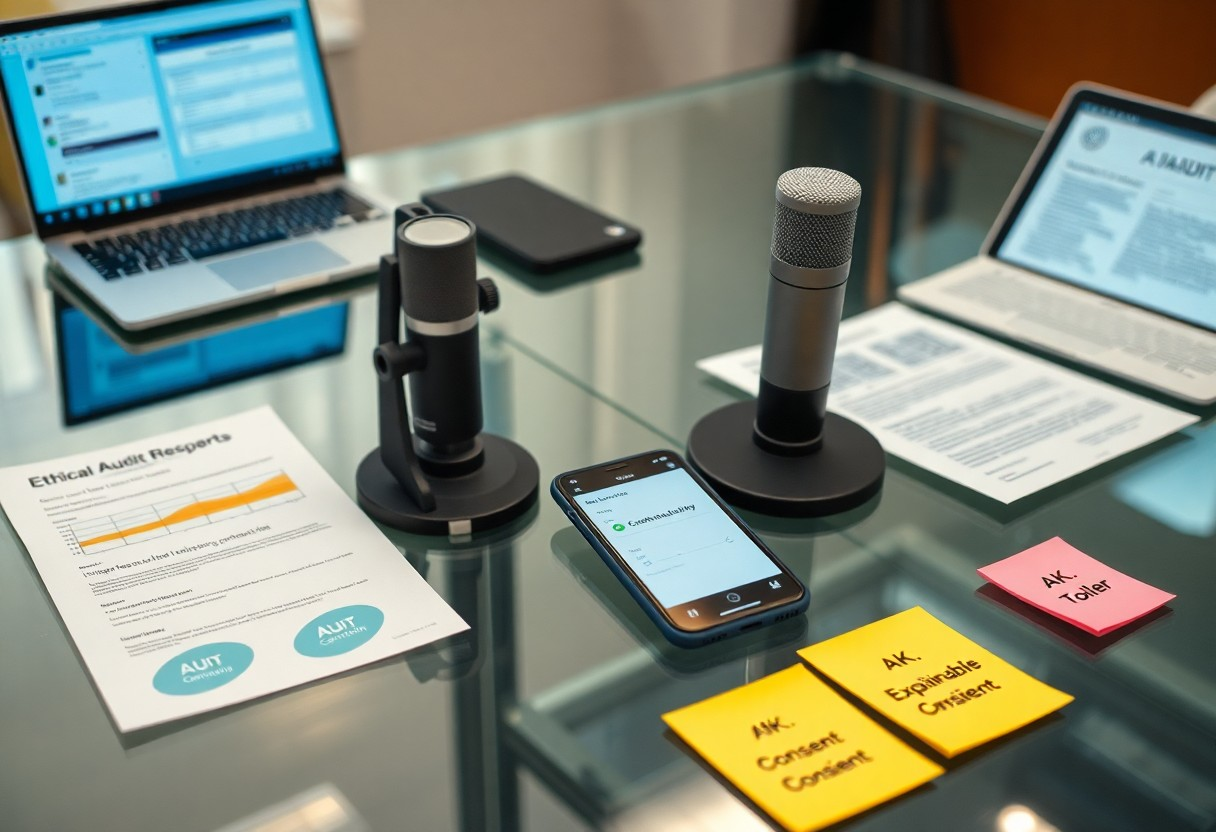
You gauge a persona’s success by whether audiences feel understood and safe, not by clever mimicry alone. Design choices – transparency about goals, clear consent flows, and predictable escalation to humans – shape trust. High-performing examples include therapy bots like Woebot, which underwent randomized trials showing symptom improvement, and platforms that publish model cards to disclose limits. When you align empathic responses with hard safety constraints, engagement deepens without exposing users to harm or manipulation.
Distinguishing empathic engagement from shallow imitation; building trust
You avoid hollow empathy by combining reflective techniques with factual grounding: summarize a user’s emotion, then offer a grounded next step. Case studies show failure modes-Microsoft’s Tay pivoted to abuse within 16 hours-so you must embed persistent guardrails. Clinical chatbots that achieved measurable benefits used scripted clinical anchors plus adaptive language; when you measure trust with retention, NPS, and disclosure rates, you can iteratively refine authenticity without faking feeling.
Privacy, consent, cultural sensitivity, and safety constraints
You implement consent that’s explicit and context-specific, keep data retention minimal, and apply techniques like differential privacy and anonymization to protect identities. Legal frameworks matter: GDPR allows fines up to €20 million or 4% of global turnover, so you design opt-in flows and data portability. Cultural failures-from Microsoft Tay’s offensive outputs to mistranslated tone in global launches-show that safety filters and local review are operational necessities when you scale personas across regions.
You operationalize those principles by running localized user testing, creating escalation paths, and maintaining audit logs. In practice you run bias and safety audits with representative panels (often across ≥5 demographic cohorts), tune content filters with human reviewers, and require human-in-the-loop for high-risk dialogs. Combine technical controls (rate limits, blacklist/whitelist, differential privacy) with governance: update model cards, document training data provenance, and log consent receipts so you can demonstrate compliance and iterate responsibly.
Measuring emotional resonance
Metrics translate feelings into signals you can act on: correlate session length, D7/D30 retention, Net Promoter Score and sentiment polarity to identify which persona elements drive affinity; triangulate quantitative shifts with qualitative themes so you can prioritize voice, empathy, and timing investments that produce measurable behavioral outcomes.
Quantitative signals: engagement, retention, sentiment, physiological proxies
For quantitative signals you monitor CTR, click-to-conversion, average session duration, D7/D30 retention and NPS, plus NLP-derived sentiment scores on a −1 to +1 scale; A/B tests often show persona tweaks deliver 5-20% lifts in engagement. Physiological proxies – GSR, HRV, pupil size and facial action units (e.g., AU12 for smiling) – provide millisecond-level arousal data you can align to moments of copy and cadence.
Qualitative evaluation: interviews, diaries, ethnography, and contextual testing
Qualitative evaluation gives you nuance: run 20-30 semi-structured interviews, 1-2 week diary studies, and 8-12 contextual field sessions to surface trust, tone, and cultural friction; thematic coding reveals language patterns that quantitative metrics miss, and iterative contextual testing (in-home or remote) shows how personas behave in real routines and edge cases.
When you operationalize qualitative work, recruit purposive samples across segments (n=20-30 per cohort), use semi-structured guides and 2-3 diary prompts per day, and code with a shared codebook until inter-rater reliability (Cohen’s kappa) exceeds 0.7; synthesize into persona playbooks containing exemplar utterances, escalation rules and A/B testable microcopy. In one product pilot, 24 patient interviews plus 14-day diaries informed tone shifts that raised self-reported empathy by 18% and cut human handoffs 22%, changes that later produced a 10% lift in trial-to-paid conversion in controlled testing.
Implementation challenges and best practices
You’ll juggle engineering, ethics, and UX trade-offs when deploying personas: aim for sub-200 ms round-trip latency for conversational fluency, enforce data minimization and consent flows, and instrument metrics for empathy and retention. Teams often run staged rollouts-canary to 1% then 10%-while monitoring hallucination rates and user satisfaction. Combine human review for high-risk intents and automated checks to scale, and maintain model cards and incident playbooks so your team responds quickly to unexpected behaviors.
Technical constraints: latency, multimodal signals, and model limitations
You must balance latency, throughput, and context size: strive for under 200 ms RTT, use 30 fps video and 16 kHz audio for reliable facial and speech cues, and pick models with 8k-32k token windows when long histories matter. Be mindful of compute cost-real-time multimodal fusion often requires GPU inference or edge-cloud hybrid architectures-and validate synchronization tolerance (audio-video sync within 50-100 ms) to keep emotional cues aligned.
Design processes: prototyping, iterative testing, and governance
You should prototype persona scripts and interaction flows in 2-4 week sprints, run A/B tests measuring engagement, sentiment, and NPS, and gate releases behind governance: model cards, bias audits, and access controls. Use red-team reviews and staged user cohorts (e.g., 100-500 participants) to detect failures early, and automate rollback and human-in-the-loop escalation for any safety deviations to protect user trust while scaling.
Define a persona spec (tone, vocabulary, boundary intents, escalation triggers) and run stakeholder workshops to align legal, UX, and product. Collect both quantitative signals-CTR, session length, sentiment score-and qualitative feedback from 20-50 moderated interviews per iteration; aim for statistical significance (p < 0.05) in A/B tests before wide rollouts. Automate logging, bias detection, and monthly retraining cycles with curated feedback to keep the persona aligned to evolving user needs and compliance requirements.
Final Words
Considering all points, you build emotional resonance with audiences by designing AI personas that mirror human empathy, maintain consistent voice and values, adapt to individual cues, and communicate transparently; these practices foster trust, relevance, and deeper engagement, enabling you to create meaningful, emotionally compelling interactions at scale.
FAQ
Q: What does “emotional resonance” mean for an AI persona?
A: Emotional resonance is the capacity of an AI persona to evoke feelings, build rapport, and create a sense of mutual understanding with users. It combines consistent voice, contextual awareness, expressive language, and appropriate pacing so interactions feel meaningful rather than transactional. Resonance is measured by how well users feel heard, understood, and positively affected after engagement.
Q: Which design elements of an AI persona most strongly drive emotional resonance?
A: Tone of voice, empathy signals, storytelling, and conversational timing are primary drivers. A steady persona voice that matches the audience’s vocabulary and cultural context builds familiarity; explicit empathy phrases and reflective listening validate user feelings; brief narratives or examples create relatable arcs; and well-timed pauses, confirmations, or follow-ups make exchanges feel attentive and human.
Q: How does personalization influence emotional connection without overstepping privacy?
A: Personalization strengthens resonance by tailoring language, references, and recommendations to user history and current context, increasing relevance and perceived care. To avoid overstepping, use minimal necessary data, provide clear consent options, explain what is saved, and offer easy controls for users to view, correct, or delete personalization data. An explicit opt-in model and on-device processing when possible reduce privacy risks while preserving warmth.
Q: What role do multimodal signals (voice, facial animation, visuals) play in creating resonance?
A: Multimodal signals enrich emotional cues that text alone can’t convey. Vocal prosody, pace, and volume express nuance; facial micro-expressions and synchronized gestures add authenticity to avatars; and supportive visuals (icons, color, layout) reinforce mood and clarity. Consistency across channels and calibrated expressiveness-avoiding exaggerated or mismatched cues-prevents uncanny reactions and maintains trust.
Q: How can teams evaluate and maintain authentic, ethical emotional resonance over time?
A: Combine quantitative metrics (engagement duration, response rates, sentiment analysis) with qualitative inputs (user interviews, open feedback, scenario testing) and physiological or behavioral studies when appropriate. Run A/B tests of phrasing and timing, monitor for bias or manipulative patterns, and apply guardrails: transparency about AI status, limits on emotional persuasion, and escalation paths to human support. Regular audits and inclusive user research ensure resonance remains effective, respectful, and safe.
Comments
2 responses
[…] The creator economy is experiencing unprecedented growth, projected to expand by a staggering 10x by 2033-2034, reaching an estimated $205-250 billion in 2024. Within this dynamic digital landscape, platforms like Fanvue empower AI creators with innovative monetization avenues and direct audience connection. However, a fundamental question continually arises for ambitious creators: what is the optimal content schedule? The digital sphere demands a constant presence, yet the specter of burnout from an “always-on” approach poses a significant threat to long-term sustainability. This article delves into the critical decision facing Fanvue AI creators: the daily posting model versus content batching. We will dissect each strategy, examining how artificial intelligence transforms their feasibility and effectiveness, ultimately helping you discover which schedule best aligns with your goals and target audience on Fanvue. […]
[…] Luxford’s subscriber-only narratives on Fanvue demonstrate that when you combine consistent persona rules with transparent disclosure, engagement often rises while skepticism […]