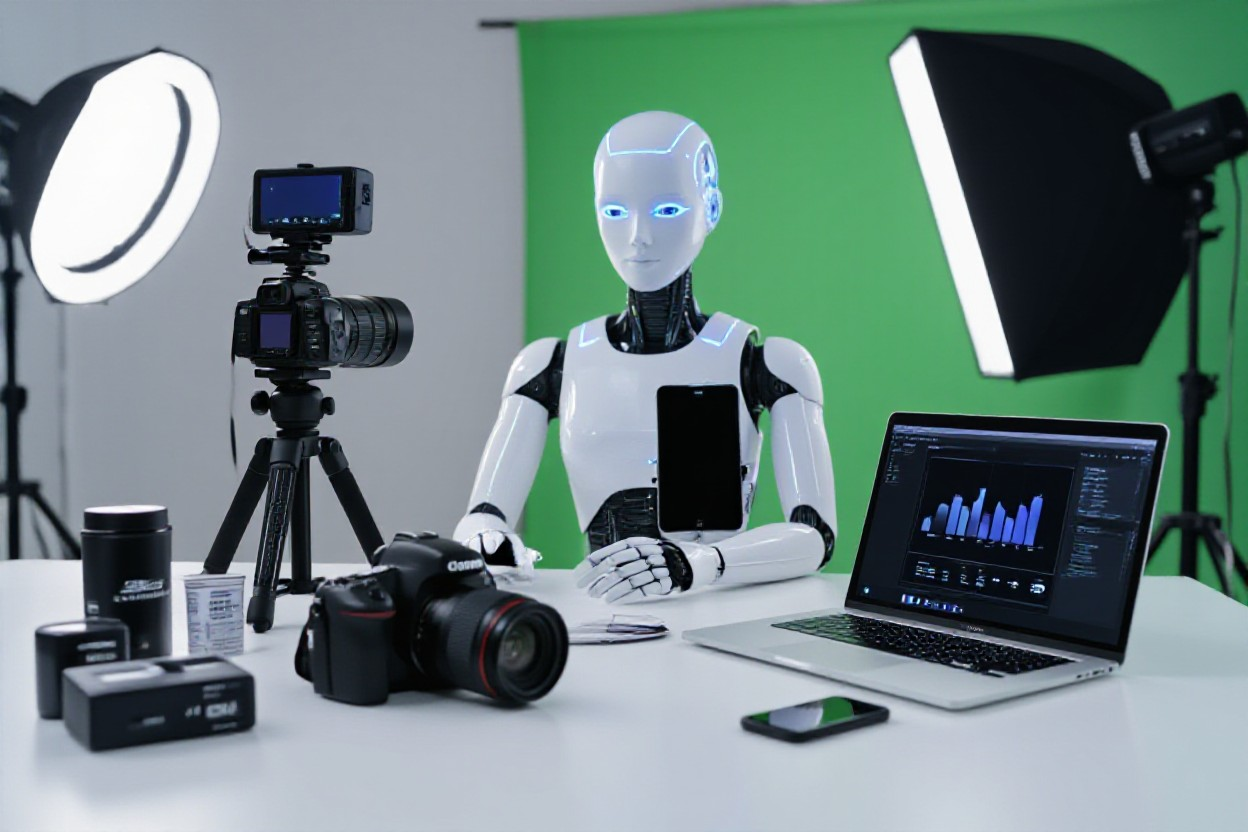
You are witnessing a significant shift in brand storytelling. Virtual personalities such as Lil Miquela and Shudu are demonstrating that human influencers are becoming optional. AI is actively reshaping how brands connect with audiences, offering new avenues for digital marketing and creative expression.
Key Takeaways:
* AI influencers offer brands complete creative control and predictability, eliminating the risk of human scandals and enabling consistent messaging across campaigns.
* These virtual personalities provide significant operational advantages, including 24/7 content production, hyper-personalization capabilities, and potential cost efficiencies compared to traditional human influencer marketing.
* The technology behind AI influencers combines AI image generation, 3D modeling, natural language processing for engagement, and predictive analytics for precise audience targeting.
* The rise of AI influencers is shifting brand storytelling towards data-driven narratives and engineered engagement, allowing for narrative consistency at scale and controlled cross-platform identities.
* Ethical considerations surrounding AI influencers include the need for transparency, potential deepfake risks, and audience manipulation concerns, prompting discussions about AI labeling and responsible deployment.

Defining AI Influencers and Virtual Personas
You encounter AI influencers as virtual personalities powered by machine learning, CGI, and automation. These digital entities have experienced explosive growth on platforms such as Instagram and TikTok, captivating audiences with their manufactured personas and curated content.
Distinguishing Fully AI-Generated vs. CGI-Human Hybrids
Fully AI-generated influencers are entirely artificial constructs, while CGI-human hybrids often blend digital enhancements with real human models. You see this distinction in the subtle nuances of their appearance and how they interact with their digital environments.
The Role of AI-Enhanced Human Influencers in Digital Media
AI-enhanced human influencers utilize AI tools to augment their content creation and audience engagement. You find these individuals using AI for tasks like content scheduling, trend analysis, or even generating script ideas, streamlining their digital presence.

You might wonder how AI-enhanced human influencers specifically benefit from these technologies. They often employ AI to analyze vast amounts of data, helping them understand audience preferences and optimize their content strategy. This includes using AI to predict popular trends, personalize interactions with followers, or even automate routine tasks like responding to comments. By integrating AI, these influencers can maintain a more consistent and engaging online presence, adapting quickly to the fast-paced demands of platforms like Instagram and TikTok, where audience attention is fleeting.
AI Influencers Explained: The Future of Brand Storytelling and Digital Marketing
Strategic Business Advantages and Brand Adoption
Major brands like Prada and Balmain are embracing AI influencers, recognizing the immense strategic advantages they offer. You gain full creative control, ensuring your brand message is always perfectly aligned. Your content production operates 24/7, vastly increasing output, and you realize significant cost efficiencies, eliminating the risks associated with human unpredictability.
Eliminating Scandals through Programmed Persona Control
You can effectively eliminate the risk of scandals by using AI influencers. Their programmed personas ensure consistent, risk-free brand representation, removing the unpredictability often found with human counterparts.
Cost-Effectiveness and Hyper-Personalization in Marketing
You will find substantial cost efficiencies with AI influencers, optimizing your marketing budget. Their ability to deliver hyper-personalized content also targets your audience with unprecedented precision.

Your marketing campAIgns become significantly more efficient and impactful through the adoption of AI influencers. These digital entities drastically reduce the overhead associated with traditional human influencer partnerships, from extensive travel to complex scheduling. You can develop highly tailored marketing messages that resonate deeply with specific audience segments, fostering a more engaging and effective connection. This precision in targeting, combined with the cost savings, allows you to maximize your return on investment in the competitive digital marketing space.
Comparative Analysis: AI vs. Human Influencers
You’ve explored the rise of AI influencers; now let’s compare their capabilities with their human counterparts.
| AI vs. Human Influencers | |
| Human Influencers | AI Influencers |
| Offer organic authenticity | Provide unlimited scalability |
| Offer algorithmic precision in a controlled environment | |
Scalability and Risk Management Frameworks
Consider the unparalleled scalability AI influencers offer. They provide unlimited reach and consistent brand messaging without the logistical challenges of human talent, operating in a controlled environment.
Programmed Authenticity vs. Organic Human Connection
Human influencers deliver organic authenticity, whereas AI influencers present a new form of “programmed authenticity.” This distinction shapes consumer perception and engagement.
You will find a key difference lies in the source of their appeal. Human influencers naturally connect through shared experiences and genuine emotions, building trust over time. AI influencers, in contrast, are meticulously designed to simulate these connections, offering algorithmic precision in their interactions. This controlled environment allows brands to maintain a consistent tone and message, yet it raises questions about the depth of connection consumers can form with a non-human entity.
Ethical Frameworks and Future Industry Trends
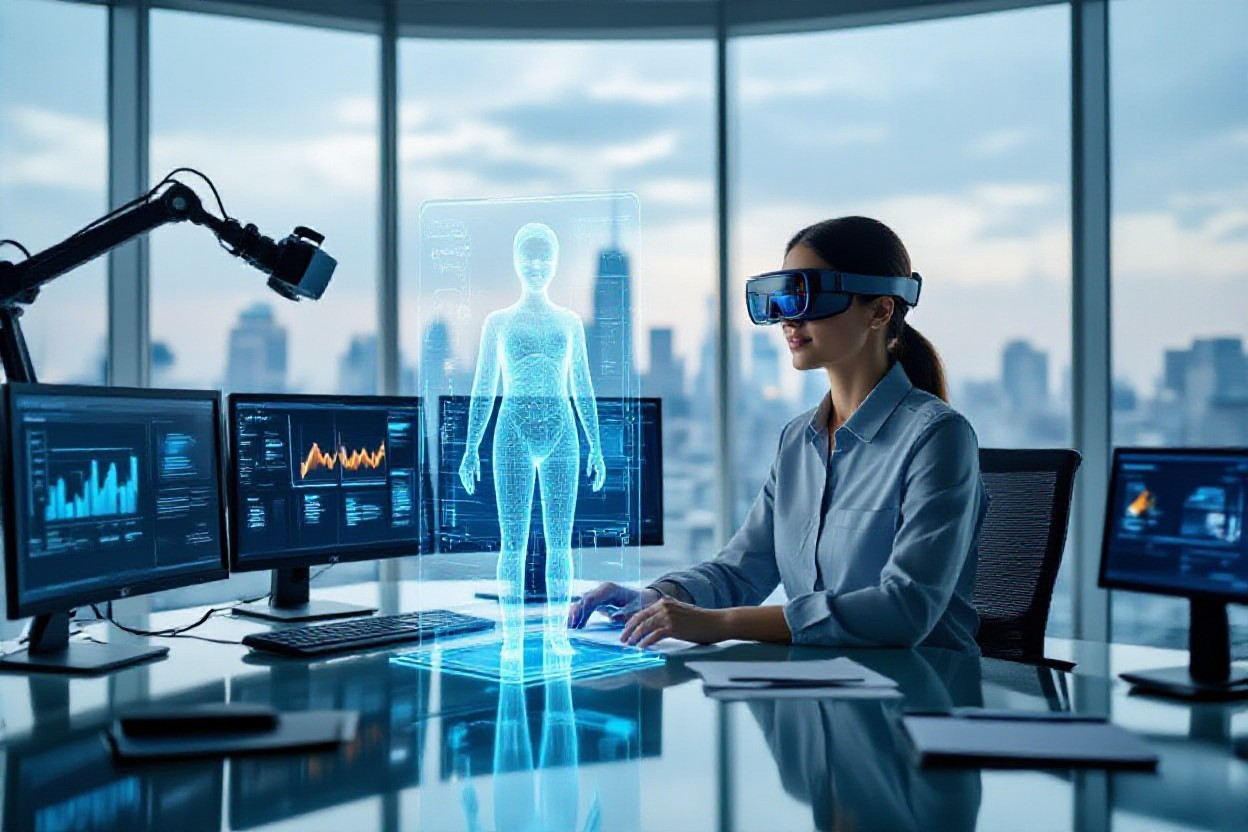
You will encounter significant challenges with deepfake risks and audience manipulation as the industry evolves. Meta’s AI labeling policies address these concerns, reflecting a proactive approach to transparency. By 2026, predictions suggest you will see personalized AI segments and widespread integration into immersive worlds like Fortnite and VR commerce.
Disclosure Requirements and Transparency in Synthetic Media
Establishing clear disclosure requirements is paramount. Meta’s AI labeling policies are a direct response to deepfake risks and the potential for audience manipulation, ensuring you understand when you are interacting with synthetic media.
In-House AI Ambassadors and Immersive AR/VR Environments
You will see brands developing in-house AI ambassadors. Predictions for 2026 indicate a future where these AI personalities integrate into immersive worlds like Fortnite and VR commerce.
Brands are already exploring the potential of in-house AI ambassadors to create unique brand experiences. By 2026, you can expect these digital representatives to become commonplace, offering personalized interactions within virtual environments. Imagine engaging with a brand’s AI ambassador directly within a Fortnite event or while exploring products in a VR commerce store, transforming how you experience brand storytelling.
Final Words
Ultimately, you must define a brand persona and choose generation tools to measure engagement when using AI influencers. These tools expand storytelling opportunities for early adopters. You will find that this technology complements, rather than replaces, human creativity in brand storytelling and digital marketing.
Q: What exactly are AI influencers and how do they differ from traditional influencers?
A: AI influencers are virtual personalities, entirely generated by computer graphics and artificial intelligence. Sophisticated algorithms and 3D modeling create their appearance, voice, and even their “personality.” Unlike human influencers, who are real people sharing authentic experiences, AI influencers are digital constructs. Brands maintain complete creative control over these virtual entities, ensuring consistent messaging and avoiding the unpredictable nature of human behavior. Platforms like Instagram and TikTok showcase their growth, making them appear alongside human counterparts.
Q: How do brands benefit from using AI influencers in their marketing strategies?
A: Brands gain significant advantages by incorporating AI influencers into their marketing. They achieve full creative control over the influencer’s image, narrative, and messaging, eliminating the risk of scandals or off-brand content. AI influencers can produce content 24/7, offering hyper-personalization opportunities for different audience segments. This approach often proves more cost-efficient in the long term compared to managing multiple human influencer campaigns, which involve variable costs and less predictable outcomes. Brands such as Prada and Balmain have already experimented with these digital personalities.
Q: What technical processes are involved in creating and managing an AI influencer?
A: Creating and managing an AI influencer involves several advanced technical processes. AI image generation and 3D modeling software sculpt their visual appearance, from facial features to clothing. Natural language processing (NLP) algorithms develop their communication style, enabling them to generate captions, respond to comments, and engage with followers. Predictive analytics tools analyze audience data, helping to target content effectively. Automation tools then schedule and publish content across various platforms, ensuring a consistent online presence. This synthetic media approach allows for scalable and data-driven engagement.
Q: How do AI influencers impact the authenticity of brand storytelling and consumer trust?
A: AI influencers introduce a new dynamic to brand storytelling, shifting it towards engineered engagement. They offer narrative consistency at scale and allow for data-driven storytelling, where content is precisely tailored to audience preferences. However, this raises questions about authenticity and consumer trust. While AI influencers can maintain a perfectly curated image, their lack of genuine human experience might limit deeper emotional connections. Transparency becomes imperative; brands must clearly disclose when they are using AI-generated personalities to maintain audience trust. Platforms like Meta are exploring AI labeling policies to address these concerns.
Q: What does the future hold for AI influencers in digital marketing, and how can businesses prepare?
A: The future of AI influencers points towards highly personalized and immersive brand interactions. We can expect to see personalized AI influencers tailored for specific customer segments or even AI brand ambassadors developed in-house by companies. Integration with augmented reality (AR) and virtual reality (VR) commerce will allow for interactive experiences in immersive worlds, like those found in gaming platforms. Businesses should prepare by defining their brand persona, exploring AI generation tools, building a consistent visual and narrative identity, and launching on one platform to measure engagement. This proactive approach will position them as early adopters in an evolving digital marketing landscape.
Comments
One response
[…] shoots and live polls convert casual viewers into subscribers and create measurable retention. Brands using virtual influencers often pair drop mechanics, limited NFT pieces and platform‑first content to drive engagement that […]