
Trends in 2026 show brands deploying AI-generated personalities to scale consistent, always-on engagement and hyper-personalized experiences; you benefit from faster content iteration, predictive customer insights, and cost-efficient multichannel presence while safeguarding your brand integrity through ethical guardrails and human oversight.
Key Takeaways:
- AI personalities let brands deliver consistent, emotionally resonant voices across channels for stronger identity and differentiation.
- They enable hyper-personalized, real-time interactions at scale, improving engagement and conversion rates.
- Automation reduces staffing bottlenecks and speeds up campaign iteration, lowering costs and time-to-market.
- Continuous learning from customer data refines responses and campaign targeting, driving measurable performance gains.
- Adoption requires clear transparency, ethical guardrails and compliance to maintain trust and avoid reputational risk.
Drivers of adoption in 2026
Falling inference costs, off-the-shelf persona platforms, and stricter data laws are pushing you to deploy AI personalities now: industry pilots report engagement lifts in the mid-teens and time-to-market cut from months to weeks. Rapid improvements in multimodal models let you deliver voice, visual, and conversational consistency at scale, while first-mover brands secure trademarkable character IP and new revenue streams from paid experiences and merch collaborations.

Consumer expectations for personalization and authenticity
Your customers expect memory, context and genuine tone: 2024-25 surveys showed most users prefer brands that recall past interactions and express a human-like point of view. When you match persona voice to microsegments – for example, a sustainability-focused avatar for eco shoppers – click-throughs and repeat visits climb, because people treat consistent characters as trustworthy shortcuts in decision making.
Market forces: cost, scale and competitive differentiation
You can reduce creative bottlenecks by automating persona-driven content: generative pipelines produce thousands of copy and asset variants at a fraction of agency rates, letting you A/B test voice and offers across segments. Competitive differentiation comes from owning a recognizable AI persona that amplifies lifetime value and makes your CPMs for native experiences more defensible.
Drilling down, major cloud providers and newer inference engines have driven per-query costs down roughly 50-70% since 2023, so deploying many lightweight personas is economically viable. You should expect content production costs to fall 30-60% when you replace manual workflows with persona templates, and companies that ran 2025 pilots reported reducing campaign iteration cycles from four weeks to under five days, enabling rapid optimization across channels.

How AI-generated personalities work
You rely on a stack: multimodal generative models, memory systems, and runtime orchestration that routes inputs, enrichment data, and safety checks to the right components. In practice you combine LLMs for dialogue, vision models for context, TTS for voice, vector stores for long-term memory, and policy engines for compliance; Character.ai and Replika illustrated this pattern in early deployments. Engineering trade-offs you face include latency, state consistency, and maintaining a coherent brand voice across sessions and channels.
Underlying models: multimodal generative agents and runtime orchestration
You deploy multimodal agents that pair text LLMs with vision encoders and neural TTS, plus diffusion or image-captioning modules when needed. Runtime orchestration-often built with tools like LangChain or custom microservices-handles RAG (retrieval-augmented generation), API calls, batching, caching, and fallbacks. Embedding retrieval typically returns candidates in tens to hundreds of milliseconds; you reduce user-visible latency with model distillation, quantized inference on GPUs or edge devices, and prioritized prompt pipelines.
Persona design: voice, tone, memory and behavior shaping
You shape persona through layered controls: voice cloning and prosody for auditory identity, controlled prompts or fine-tuning for tone, short- and long-term memory stores for context, and reward-model-driven behavior shaping to steer actions. Teams instrument A/B tests and pilot cohorts; many brands report double-digit engagement uplifts when persona consistency and relevance improve. Safety filters and explicit consent mechanisms ensure the persona behaves within legal and brand boundaries.
You implement voice by capturing 30-300 seconds of reference audio for neural TTS and refining prosody with SSML hooks; you control tone via fine-tuning, soft prompts, or instruction tokens that bias generation toward specific lexical choices and sentiment. For memory, you combine a short-term sliding window with episodic vector stores that summarize and expire entries based on retention policies and privacy rules; retrieval uses RAG with confidence thresholds. Behavior shaping relies on human-in-the-loop preference labels, reward-model calibration, and layered guardrails-classifiers, blocklists, and escalation flows-while you track KPIs like NPS, session length, retention, and conversion to measure persona impact.

High-impact use cases
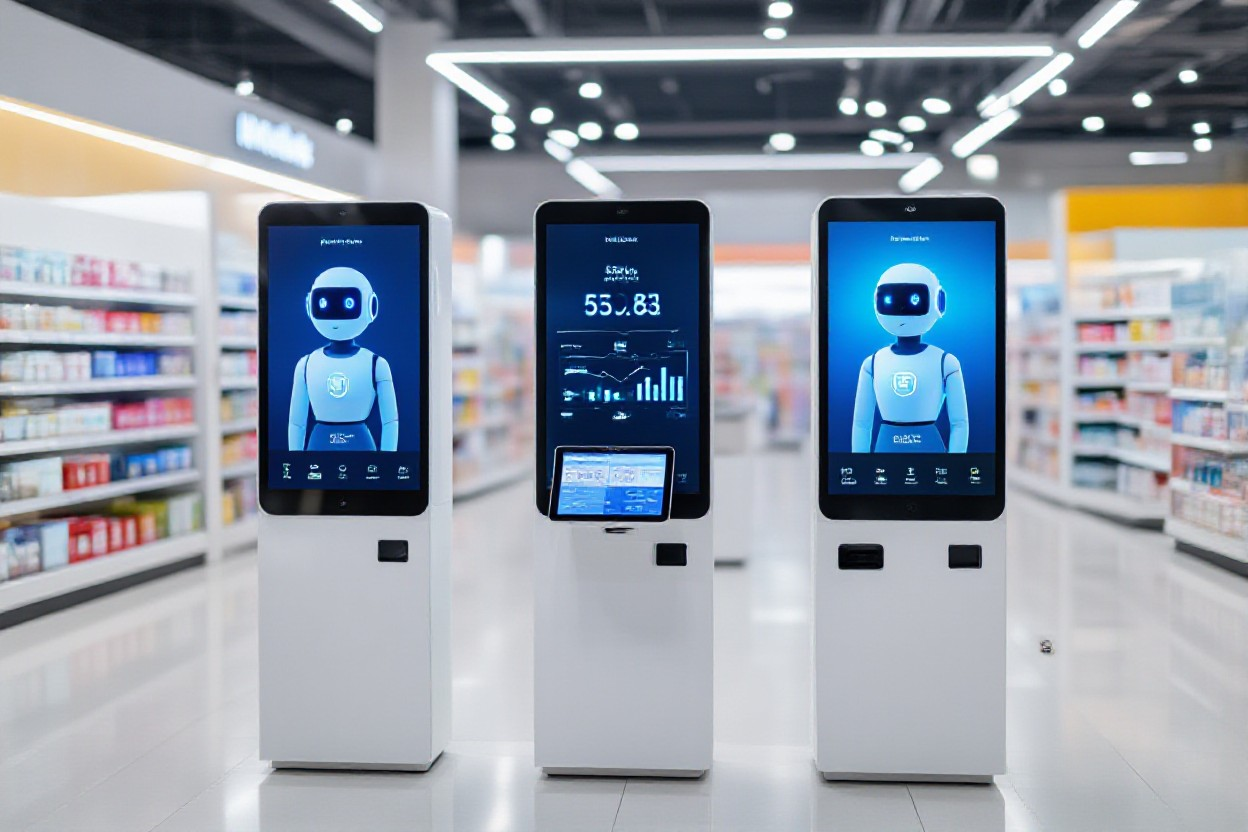
You’ll find AI-generated personalities deployed where scale and nuance meet: 24/7 conversational agents for customer touchpoints, avatar-led commerce experiences, and narrative-driven marketing campaigns. Examples include Sephora’s Virtual Artist (2016) as an early retail precedent and modern stacks built on IBM Watson Assistant, Synthesia video avatars, and ElevenLabs voices. These combos let you personalize language, tone, and offers in real time across channels, turning static brand assets into responsive, measurable experiences that you can iterate on weekly instead of yearly.
Customer service, commerce and conversational assistants
You can automate tier-one support while preserving brand voice by training AI personas on your FAQ, CRM records, and tone guidelines. KLM’s chatbot experiments and enterprise adopters using Watson Assistant show you can integrate booking, refunds, and product recommendations into a single flow. Deployments often run 24/7, handle multilingual queries, and pass complex cases to humans with context, letting your agents resolve escalations faster and freeing headcount for higher-value work.
Marketing, storytelling and immersive brand experiences
You’ll use AI characters to deliver longer engagement and richer data: Synthesia-style avatars host product launches, while interactive NPCs power branded metaverse activations and in-app narratives. Brands that pilot these formats track dwell time, sentiment, and conversion across touchpoints, and you can A/B test persona traits-age, humor, formality-to optimize performance. This turns one-off content into a continuous learning channel for creative and media teams.
For implementation, you should start with a narrow use case-onboarding flow or hero video-and instrument it with KPIs like dwell time, retention, conversion lift, and sentiment score. Use phased datasets: scripted responses first, then broaden with customer transcripts to reduce hallucination. Legal and accessibility checks matter; stamp transcripts with voice and copyright metadata, and provide fallback human routes. Successful pilots use iterative sprints, measuring incremental lifts (e.g., minutes of engagement or click-throughs) before scaling the persona across channels.
Benefits and commercial upside
Scalability, consistency and new revenue channels
Brands use AI personalities to scale human-like interactions without linear headcount increases. You can spin up localized avatars across channels, producing content 5-10x faster and cutting support costs 30-50% in pilots. That scale creates new revenue: subscription access to premium personas, shoppable livestreams, virtual goods and licensing of character IP. For example, retailers converting a single persona into region-specific voices and product bundles often unlock repeat purchases and higher average order value.
Enhanced engagement, loyalty and data-driven personalization
Personalized AI voices and characters drive deeper engagement and loyalty by delivering timely, conversational recommendations. You’ll see higher session duration, conversion lifts in the 10-20% range in many pilots, and improved repeat purchase rates when the persona stores contextual history. Live agents augmenting AI personas report faster onboarding and higher NPS. Integrations with CRM and loyalty programs let you tie interactions directly to revenue and lifetime value.
Granular data powers persona-driven personalization: you feed first-party signals-purchase history, browsing, and consented voice/text interactions-into models that adapt messaging in real time. This enables micro-segmentation (hundreds of audience slices), triggered offers at optimal moments, and A/B tests that refine voice, tone and upsell timing. In practice you can increase retention and lifetime value by high single to low double digits, while retaining privacy-compliance through on-device or federated approaches.
Risks, ethics and regulation
You must balance innovation with legal exposure: GDPR fines reach €20 million or 4% of global turnover, while the EU AI Act already designates “high‑risk” AI for conformity assessments and human oversight. U.S. states like California and Virginia are tightening privacy rules, and regulatory scrutiny and class actions over bias or misrepresentation have driven multimillion‑dollar settlements-so your compliance and governance choices directly affect both liability and brand trust.
Privacy, misinformation and brand safety concerns
Your AI persona can unintentionally expose PII, fabricate quotes, or be repurposed as a deepfake in disinformation campaigns, triggering takedowns and consumer backlash. Detection tools still miss sophisticated synthetic media, so you need provenance tagging (C2PA), layered content moderation, and clear consent workflows; brands that ignored these controls have faced rapid reputational erosion and regulatory complaints within weeks of deployment.
Compliance, disclosure and responsible deployment practices
You should label AI outputs, run algorithmic impact assessments (AIAs), and maintain auditable logs of training data and decision traces. Implement human‑in‑the‑loop for high‑stakes interactions, apply data‑minimization and differential‑privacy where possible, and use provenance standards so your personas meet EU AI Act expectations and reduce GDPR or state privacy exposures.
Operationalize this by publishing model cards and data sheets, scheduling quarterly red‑team audits, and retaining provenance metadata per C2PA. Require third‑party certifications (SOC 2 or ISO/IEC 27001) prelaunch, document remediation plans from AIAs, and embed disclosures-visual watermarks, spoken disclaimers, and clickable provenance-across touchpoints so regulators and users can verify authenticity and you can demonstrate due diligence.

Implementation best practices
Audit your data, define 5-10 target personas, and map each to specific touchpoints before you scale; aim for latency under 200 ms for real-time channels, keep automated replies to about 70-80% of routine queries, and track NPS, CSAT and conversion lift (run initial pilots with 1,000-10,000 users). Use brand voice guidelines, versioned prompts, and phased rollouts to limit rollbacks and measure lift against control cohorts.
Integration, human-in-the-loop workflows and testing
Integrate with CRM (Salesforce), CDP (Segment), and ticketing systems (Zendesk) so you can pull context and log interactions; route interactions with confidence scores below 0.7 to agents, use annotation tools for batch review, and run A/B tests on at least 10,000 sessions to validate a target 3-7% conversion uplift. Automate regression tests and run weekly sampling of 1% of outputs for compliance checks.
Governance, monitoring and crisis response plans
Set clear KPIs, retain interaction logs for 90 days, and build real-time dashboards for sentiment, escalation rate and error rates; define SLAs (incident response within 15 minutes, mitigation within 1 hour), schedule quarterly red-team adversarial tests, and keep legal and communications on-call for high-severity incidents. Label model versions and record prompt histories for audits.
Assign roles: a service owner, an incident commander and a communications lead; codify playbooks that trigger on thresholds (e.g., a 1% spike in complaint rate or a 0.5% rise in safety hits). Run tabletop simulations twice yearly, maintain hot rollback ability to the previous model within 10 minutes, and preserve explainability logs for 10-30% of interactions to support post-incident forensics and regulator inquiries.
Conclusion
To wrap up, AI-generated personalities let you scale personalized, on-brand interactions while reducing operational costs and accelerating campaign testing. They give your team consistent tone, real-time learning from customer signals, and 24/7 availability, so you can deepen engagement and move faster in competitive markets. Adopt with governance to protect trust and compliance.
FAQ
Q: What are AI-generated personalities and how do they differ from traditional chatbots?
A: AI-generated personalities are purpose-built conversational agents that combine a consistent persona, tone, memory, and behavior patterns with advanced generative models. Unlike rule-based chatbots that follow scripted flows, these personalities adapt language, emotional cues, and recommendations in real time, maintain multi-turn contextual memory, and can operate across text, voice, and visual interfaces to create a cohesive brand character.
Q: Why are so many brands adopting AI-generated personalities in 2026?
A: Rapid improvements in large multimodal models, lower deployment costs, and consumer appetite for personalized, humanlike interactions have driven adoption. Brands use these personalities to differentiate experiences, scale bespoke service without proportional headcount increases, extend brand presence into emerging channels (AR/VR, metaverse), and convert data insights into emotionally resonant engagement that boosts lifetime value.
Q: How do AI-generated personalities boost engagement and business results?
A: They deliver hyper-personalized recommendations, contextual follow-ups, and emotionally intelligent interactions that increase conversion rates, average order value, and repeat purchases. By maintaining a consistent persona across touchpoints, they strengthen brand recall and trust; measured benefits often include higher NPS, lower churn, fewer support escalations, and reduced resolution times through proactive, anticipatory service.
Q: What ethical, legal, and reputational risks should brands watch for, and how can they mitigate them?
A: Key risks include biased outputs, unauthorized use of user data, deepfake-style impersonation, and erosion of trust if the AI is not disclosed. Mitigations include transparent disclosure of AI use, consent-driven data practices, bias audits, human escalation pathways, strict guardrails for sensitive topics, secure data handling, and compliance with sectoral regulations and emerging AI governance frameworks.
Q: What are practical steps for implementing AI-generated personalities responsibly and measuring success?
A: Start by defining a clear persona and permissible behaviors aligned to brand values and target use cases, then run small pilots with A/B testing and human-in-the-loop review. Build or select a tech stack that supports fine-tuning, context retention, audit logging, and privacy controls. Track both business KPIs (conversion, retention, CLV) and safety KPIs (error rate, escalation frequency, bias incidents), and iterate using user feedback, ongoing monitoring, and periodic external audits.
Comments
2 responses
[…] has driven a search for more reliable, efficient, and brand-aligned promotional channels. The market for AI influencers is not just a fleeting trend; it represents a strategic response to these evolving industry […]
[…] This dynamic environment underscores the growing importance of investing in content marketing, a trend supported by approximately 50% of marketers planning to increase their investment in 2024 [HubSpot, […]