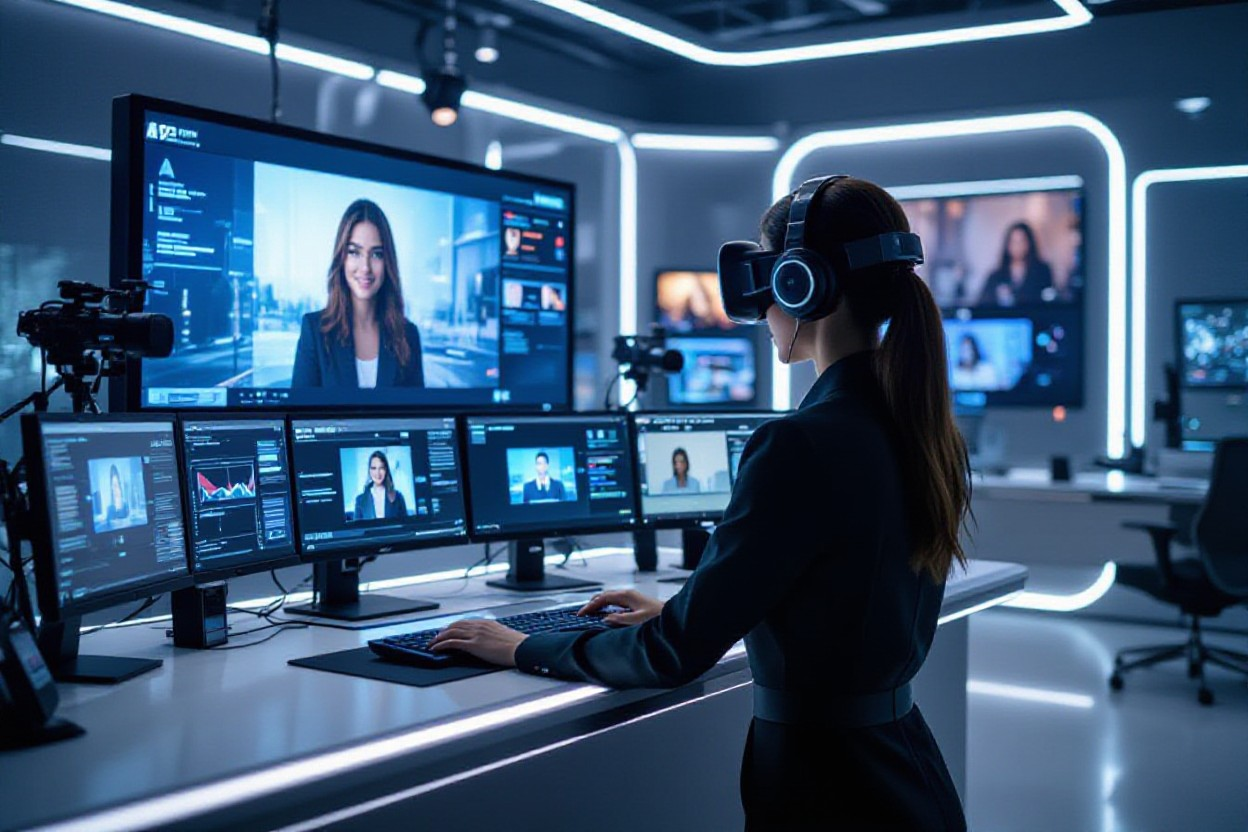
Influencers powered by AI pull back the curtain so you can see the 3D modeling, adaptive algorithms, and storytelling techniques that craft consistent, immersive personas. You’ll learn how Aurelia Luxford uses behind-the-scenes content on Fanvue to reveal digital sets, fashion shoots, and interactive experiences that strengthen your engagement. This inside access shows the creative, technical, and editorial choices that keep fans invested and eager for more.
Key Takeaways:
- AI-driven 3D modeling, programming, and storytelling combine to create consistent virtual personas and limitless content variations.
- Behind-the-scenes content highlights the artistry of digital sets, fashion shoots, and interactive design, deepening fan connection.
- Transparency about the creative process boosts perceived authenticity and keeps audiences engaged over time.
- Aurelia Luxford’s Fanvue exclusives show how gated BTS access strengthens loyalty and monetization.
- Subscriptions deliver immersive experiences, early access, and direct interaction that motivate ongoing support.

The Rise of Virtual Influencers
Definition and Overview
You interact with virtual influencers created from 3D modeling, motion capture, procedural animation, and AI-driven dialogue that sustain a coherent persona across platforms. They combine storytelling scripts with generative models to produce photos, short videos, and chat interactions at scale. Aurelia Luxford exemplifies this mix on Fanvue, where you can trace the pipeline from concept art and rigging to final render, revealing how technical layers shape the character you follow.

Popularity and Cultural Impact
Major virtual talents like Lil Miquela have amassed more than 3 million followers and collaborated with brands such as Prada and Calvin Klein, proving commercial viability. You see agencies and labels increasingly commissioning digital talent for product launches and editorial campaigns because virtuals offer precise brand control and repeatable aesthetics. Platforms like Fanvue convert behind-the-scenes access into subscription revenue, turning curiosity about process into a monetizable fan relationship.
Beyond brand deals, virtual influencers have driven cultural moments: Hatsune Miku sold out arena shows, virtual concerts and AR activations broaden global reach, and social communities form around serialized narratives. You benefit from this ecosystem when creators like Aurelia use BTS content to deepen engagement-subscribers convert into active supporters through exclusive workflows, limited drops, and interactive storylines that traditional influencers struggle to sustain.
The Technology Behind AI Models
Under the hood, pipelines combine 3D engines, renderers, ML inference stacks, and asset-management tools you interact with as a creator or subscriber; real-time shoots often use Unreal or Unity while high-res stills rely on Blender or offline renderers. Teams run multi-GPU nodes (RTX 3080-4090 or larger) for training and inference, and models-GANs, diffusion nets, transformers-are tuned to meet 50-200 ms latency targets so your interactive experiences stay responsive and visually consistent.

3D Modeling and Animation
You’ll see asset pipelines start with photogrammetry or ZBrush sculpts, then retopology in Maya or Blender to hit platform polycounts (50k-500k tris for hero shots, 10k-60k for real-time avatars). Textures commonly range 2K-8K with PBR maps, hair uses strand sims or cards, and cloth leverages Marvelous Designer or PhysX; motion capture from Xsens or Rokoko is cleaned, retargeted, and blended with hand-keyed animation to preserve nuanced expression.
AI Programming and Machine Learning
You’ll work with datasets of millions of annotated images and hundreds of hours of motion to train models: StyleGAN variants or diffusion models for visuals, transformer encoders for captions and persona voice. Training typically runs in PyTorch across multi-GPU servers with models from 100M to several billion parameters; inference is optimized with ONNX/TensorRT and INT8 quantization to reach 50-150 ms on modern GPUs, while lightweight safety classifiers filter outputs in real time.
You’ll see teams fine-tune base models on curated corpora of the influencer’s scripts, voice lines, and aesthetic tags, applying RLHF to align tone and cut off-brand replies by 30-60% in A/B tests; conditional inputs like emotion vectors, scene context, and lip-sync controllers feed models live, and analytics routinely report engagement uplifts of 12-25% when responses are personalized and stylistically consistent.
Creative Storytelling Techniques
Creative storytelling blends 3D assets, scripted beats, and interactive design so your virtual influencer feels alive across formats. You tie motion-captured gestures to a persona bible, layer neural voice synthesis for consistent speech, and schedule episodic drops that sync with fashion shoots or polls on Fanvue. By combining procedural props, hand-crafted dialogue, and data-driven pacing you sustain engagement while giving fans repeatable rituals they can follow and influence.

Building a Persona
You construct a persona with five core attributes-backstory, visual style, voice, interaction rules, and boundaries-and encode them as style guides and model conditioning. Use a reference dataset (images, 10-30 voice clips, sample dialogue) to fine-tune embeddings, rig a Blender/Unreal character for consistent motion, and publish a persona bible so every caption, filter, and reply matches the same profile across shoots and AMAs.
Engaging Narratives and Themes
You design narratives as episodic arcs and thematic seasons: short 2-4 episode storylines, recurring motifs (fashion, travel, self-discovery), and interactive decision points via polls or paid choices. Mix scripted cinematics with user-driven branches to boost retention, and align each episode with a content type-photo drop, 60s clip, behind-the-scenes clip-to maximize cross-format reach and measurable engagement on Fanvue.
For implementation, start by mapping a 5-point emotional arc for each mini-season and assign 2-3 asset types per beat (hero image, vertical clip, BTS clip). You can create two decision nodes per arc-each poll leads to divergent scenes-while reusing character rigs and background plates to save render time. On the tooling side, storyboard in Figma, animate in Unreal or Blender, composite in DaVinci Resolve, and fine-tune voice with 10-20 minutes of curated speech for naturalness. Finally, A/B test thumbnails and poll timing to drive higher completion and repeat visits.
Behind-the-Scenes Content Creation
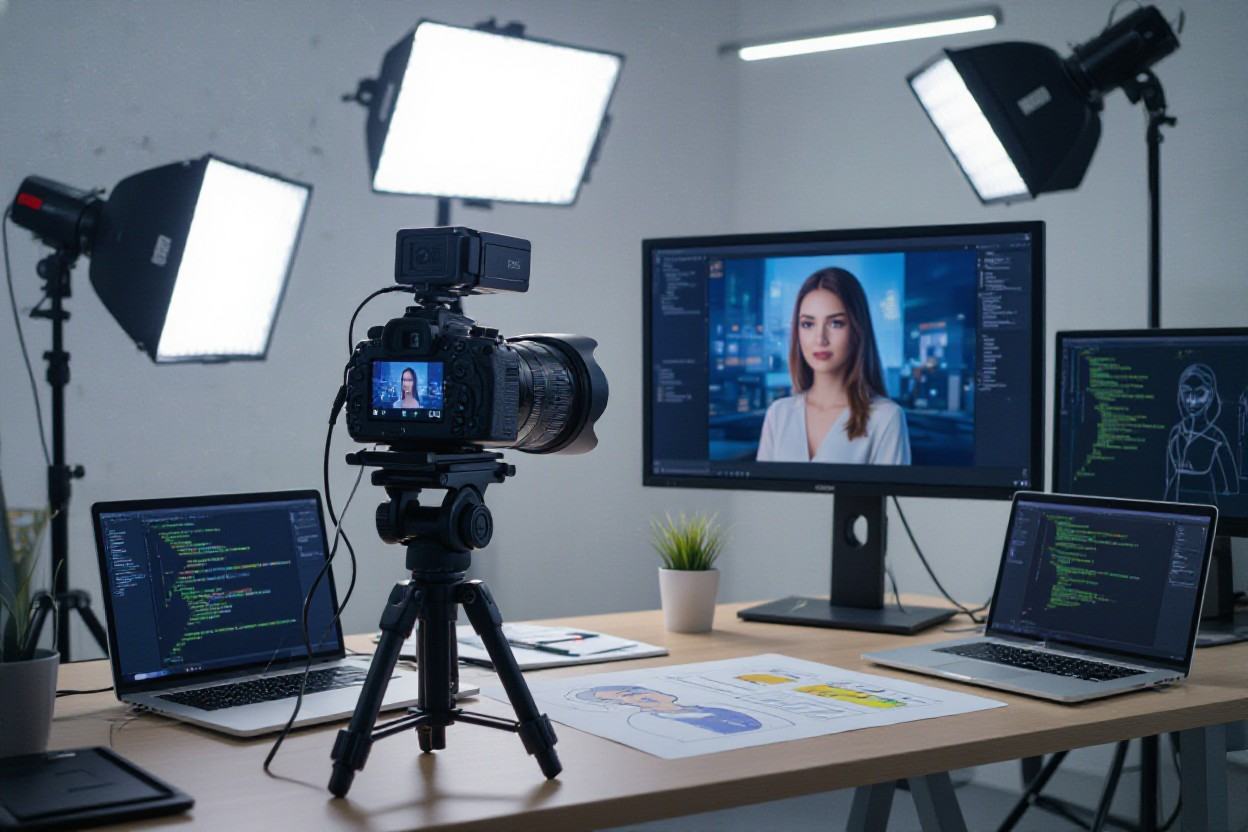
When you explore Aurelia Luxford’s Fanvue behind-the-scenes series, you see pipelines that mix photogrammetry, procedural assets, and motion-capture data to produce episodes rendered at 4K/60fps; she routinely shares lighting breakdowns, 15-step post workflows, and short clips of animators refining facial blendshapes, giving you concrete examples of how consistency and scale are achieved across daily posts.
Digitally Constructed Environments
You watch environment teams assemble scenes from hundreds of reusable assets, combining UE5 Nanite meshes, tileable PBR textures, and localized ray-traced lighting; Aurelia’s desert shoot, for example, used 120 asset variations and LODs to keep frame costs manageable while enabling live interactive elements that respond to fan prompts in real time.
Fashion and Styling Innovations
You learn how virtual garments start in Marvelous Designer, move through retopology and weight-painting, and end as GPU-simulated cloth with layered microtextures; stylists iterate with 30+ outfit variants per campaign and publish A/B render tests so your feedback directly influences final looks.
Design teams then run batch renders and parameter sweeps-adjusting fabric friction, stitch density, and normal-map detail-before exporting LODs and cloth caches; Aurelia’s team sometimes runs 500+ test frames per look and uses subscriber polls (often 5k-10k votes) to finalize colorways, demonstrating how iterative, data-driven styling keeps your experience both polished and participatory.
Fan Engagement Strategies
Interactive Content and Gamification
You get deeper engagement when interactive mechanics replace passive scrolling: polls that steer a photoshoot, AR try-ons that let you place Aurelia’s outfits in your room, or short branching stories powered by conversational AI. Gamified rewards – badges, leaderboards, timed challenges – motivate repeat visits and UGC. Aurelia pairs weekly choose-your-path polls with micro-rewards on Fanvue, turning single posts into serialized, participatory experiences that keep fans returning for the next decision point.
Exclusivity and Behind-the-Scenes Access
You subscribe for backstage intimacy: raw motion-capture clips, 3D asset breakdowns, and step-by-step render passes that show how Aurelia’s digital sets and fashion shoots are built. Fanvue tiers unlock different depths of access, so you can move from curated highlights to technical deep-dives that reveal the artistry and tooling behind each image, strengthening trust and fandom.
For more value, creators structure exclusivity across formats: monthly livestreams of mocap sessions, downloadable presets, short tutorials on shader and lighting tricks, and subscriber-only drops of NFT-style assets or limited edits. You get both process and provenance – time-lapse renders, voice-synthesis trials, and production notes – which turn casual viewers into invested patrons who understand and appreciate the craft behind every post.
The Future of Virtual Influencers
Emerging real-time pipelines will change how you interact with digital creators: expect Unreal/Unity-driven scenes, sub-100ms inference for live Q&A, and motion-capture at 60-240 fps feeding procedural animation so episodes drop weekly without human-overrun costs. You’ll see episodic strategies-Aurelia Luxford’s Fanvue drops are a template-where serialized releases and exclusive behind-the-scenes content turn casual viewers into subscribers and raise lifetime value per fan.
Trends on the Horizon
Augmented reality try-ons, synchronized live commerce, and in-game events will dominate: platforms like TikTok Live and Amazon Live already host branded shopping streams, and gaming concerts (e.g., Fortnite’s Travis Scott event drew ~12 million players) show scale. You’ll also get hyper-personalized narratives powered by recommendation models that stitch user data into tailor-made scenes, while NFTs and interoperable avatars enable cross-platform monetization and ownership models.
Ethical Considerations and Challenges
You’ll confront disclosure, dataset provenance, and manipulation risks: the FTC expects clear endorsement labeling, training data can embed bias, and deepfake-capable pipelines raise impersonation threats. Protecting minors, preventing undisclosed targeted persuasion, and maintaining copyright compliance for training assets are governance items you must prioritize as adoption scales.
To mitigate those risks you should adopt transparent labeling, dataset documentation, and watermarking of synthetic media; implement human-in-the-loop review and audit logs; and secure opt-in consent for any personalization using personal data. Aurelia’s approach-showing production workflows on Fanvue-illustrates how transparency builds trust, while regulators worldwide increasingly propose AI-labeling rules that will make procedural safeguards a business necessity.
Final Words
On the whole, you see how AI models blend technical rigour, 3D artistry, and narrative design to sustain a virtual influencer’s persona and keep your engagement high; by granting behind-the-scenes access and tailored experiences, creators turn curiosity into loyalty, so your subscription becomes a direct line to ongoing creative innovation.
FAQ
Q: How do AI models create the visuals and posts fans see from virtual influencers?
A: The pipeline begins with creative direction and concept art, followed by 3D modeling, rigging, texturing, lighting and animation in tools like Blender or Unreal Engine. Generative AI (GANs, diffusion models) and procedural shaders accelerate variations in fashion, makeup and backgrounds. Motion capture or keyframe animation provides natural movement; neural networks generate facial expressions and subtle micro-expressions. Language models draft captions and replies, then human artists and editors refine output to match aesthetic and platform requirements. Iteration, asset libraries and automated rendering farms allow rapid production of high-quality, on-brand content.
Q: What keeps a virtual influencer’s persona consistent across different posts and platforms?
A: Consistency comes from a defined persona bible: tone of voice, backstory, visual style guides, color palettes and wardrobe rules. Text-generation models are fine-tuned or prompt-engineered with persona-specific datasets so captions and replies align with character traits. Asset templates and modular 3D rigs ensure the face, body language and wardrobe stay coherent. Editorial calendars and approval workflows enforce messaging consistency, while analytics inform adjustments so the persona evolves but remains recognizable.
Q: What behind-the-scenes content do creators like Aurelia Luxford share with subscribers, and why does it drive subscriptions?
A: Subscribers get timelapse videos of scene builds, raw and alternate renders, concept sketches, breakdowns of lighting and styling choices, tutorial-style walkthroughs of tools used, and private live streams where creators test looks and take fan input. Exclusive polls, early-access drops and interactive Q&A sessions deepen emotional investment. These elements turn passive viewers into invested community members by exposing craft, inviting participation and offering content they can’t get publicly.
Q: How do virtual influencers interact with fans in real time, and what technologies enable that interactivity?
A: Real-time interaction uses a mix of LLM-driven chatbots for conversational replies, rule-based moderation to filter harmful content, and animation pipelines that map text or audio cues to facial rigs and gestures. WebRTC or streaming platforms handle low-latency live video; AR filters and customizable avatars let fans appear alongside the influencer in content. APIs connect subscription platforms like Fanvue to CRM and messaging systems to personalize responses and unlock gated interactions for paying subscribers.
Q: What ethical, legal and privacy issues should fans and creators be aware of with behind-the-scenes AI content?
A: Transparency about the virtual nature of the influencer and clear labeling of AI-generated content reduce deception risks. Protecting subscriber data, obtaining consent for fan contributions, and avoiding unauthorized use of likenesses or copyrighted assets are necessary. Creators should disclose synthetic elements in promotional contexts, implement robust moderation to prevent harassment, and maintain versioned asset rights and licensing records. Ethical guidelines and platform policies help balance creative freedom with user safety and legal compliance.